One of the most common questions we receive is:
"My watch has stopped. Does it need a new battery?"
The answer depends on the type of watch you own.
Many people are surprised to learn that not all watches use a traditional battery. In fact, we regularly receive enquiries about replacement batteries for Kinetic, Eco-Drive and Solar watches, even though they work quite differently from standard quartz watches.
Here's a simple guide to understanding the differences.
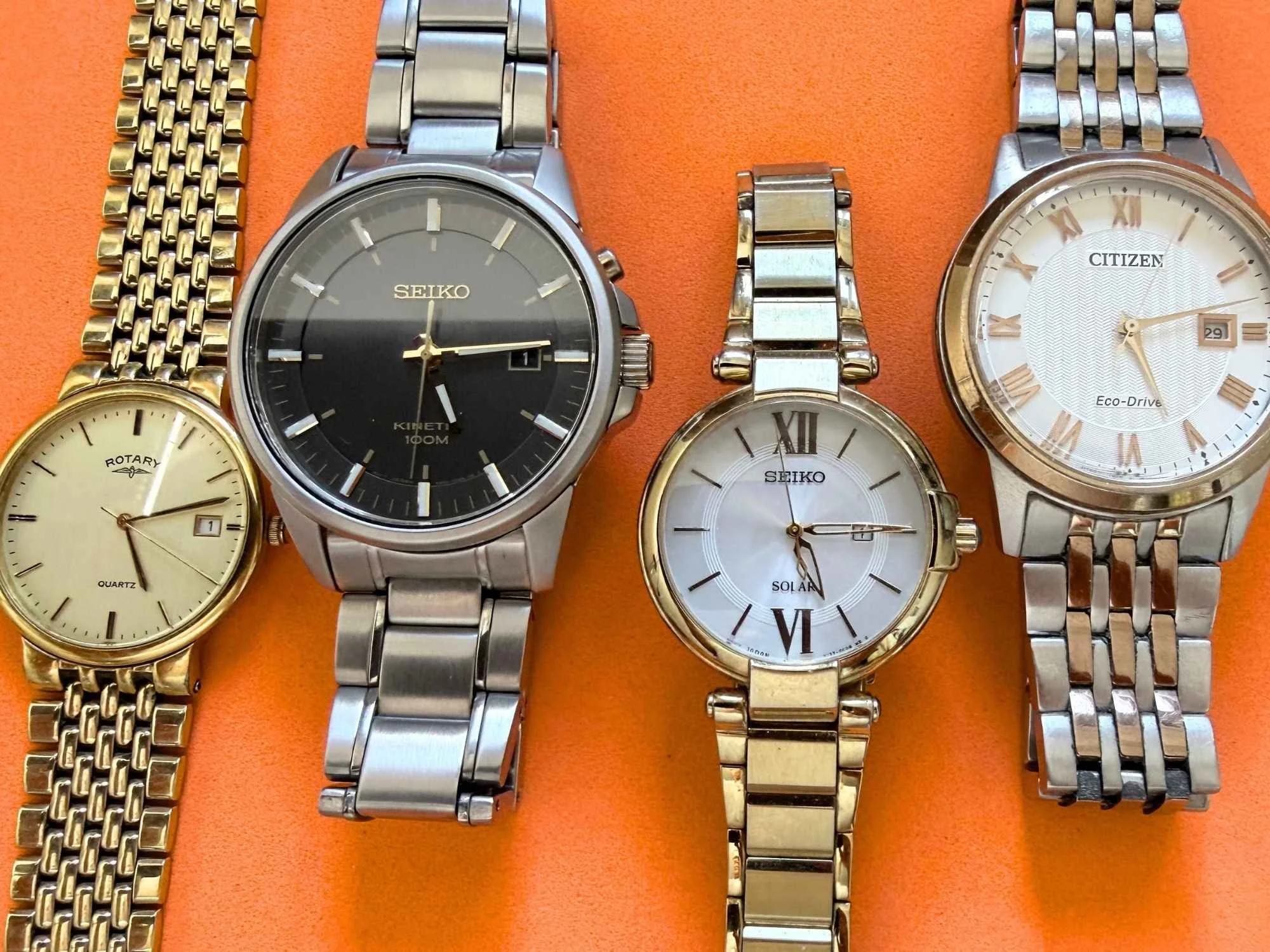
Quartz, Kinetic, Solar and Eco-Drive Watches
Quartz Watches
Quartz watches are the most common type of watch in use today.
Inside the watch is a small quartz crystal. When electricity from the battery passes through the crystal, it vibrates at an incredibly precise frequency. These vibrations are used to keep accurate time.
Because quartz technology is so reliable, quartz watches are generally very accurate and require little maintenance.
How Are Quartz Watches Powered?
Quartz watches use a small battery.
Most batteries last between one and three years, although this can vary depending on the watch and how it is used.
When the battery runs low, the watch will usually stop and require a battery replacement.
Common Quartz Watch Problems
Flat battery
Corrosion caused by an old battery
Water damage
General wear and tear
Kinetic Watches
Kinetic watches were developed to combine the accuracy of quartz technology with the convenience of self-charging power.
Instead of relying on a standard battery, a kinetic watch generates power from the movement of your wrist.
Inside the watch is a small rotor that spins as you move. This movement creates energy, which is stored in a rechargeable capacitor or rechargeable cell.
Do Kinetic Watches Need Batteries?
Not in the traditional sense.
However, the energy storage component can wear out over time.
When this happens, the watch may:
Stop unexpectedly
Fail to hold a charge
Need frequent movement to keep running
In many cases, the rechargeable cell can be replaced.
Common Kinetic Watch Problems
Worn rechargeable cell
Failure to hold charge
Lack of use causing discharge
Water damage
Solar and Eco-Drive Watches
Solar watches and Citizen Eco-Drive watches use light as their power source.
Small solar cells hidden beneath the dial convert both natural and artificial light into electrical energy.
That energy is stored in a rechargeable battery, allowing the watch to continue running even when it's not exposed to light.
Do Solar Watches Need Batteries?
Yes, but not in the same way as a standard quartz watch.
Solar watches use rechargeable batteries that are designed to last for many years.
However, rechargeable batteries gradually lose efficiency as they age.
Eventually, the watch may:
Stop holding the charge
Require frequent exposure to light
Stop running altogether
When this happens, the rechargeable battery can often be replaced.
Common Solar Watch Problems
Ageing rechargeable battery
Insufficient exposure to light
Water damage
Faulty charging circuits
Which Type Is Best?
There isn't a single right answer.
Each type has advantages:
Quartz
Highly accurate
Affordable to maintain
Simple battery replacement
Kinetic
Powered by movement
No routine battery changes
Accurate quartz timekeeping
Solar and Eco-Drive
Powered by light
Very low maintenance
Environmentally friendly
The best choice depends on how you use your watch and your personal preferences.
Final Thoughts
While quartz, kinetic and solar watches all keep excellent time, they are powered in very different ways.
Understanding which type of watch you own can help explain why it has stopped and what sort of repair or maintenance it may need.
If you're unsure whether your watch needs a battery replacement, a rechargeable cell or something else entirely, we're always happy to help identify the problem and advise on the most suitable repair.